

Foundations for Success
Statewide Planning Process to Reduce Exclusionary Discipline of Early Learners
2026
In 2026, IMPH is facilitating an action planning process with the state’s experts and individuals with lived experience to develop actionable, consensus-based strategies to reduce early age suspensions and expulsions.
Taskforce Chair
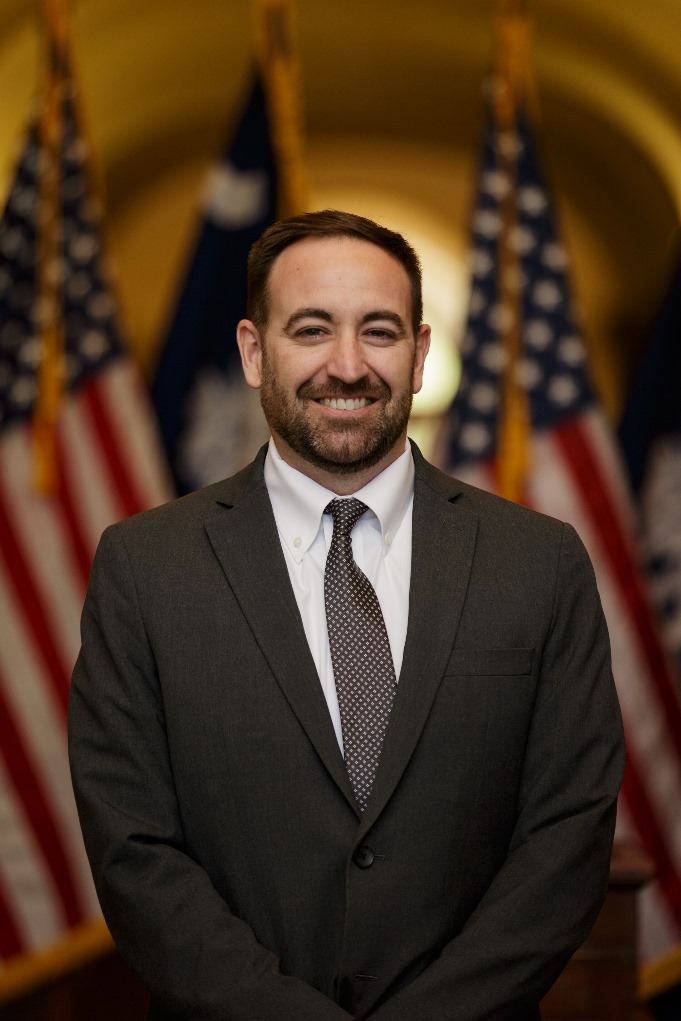
The Foundations for Success Taskforce is chaired by Michael H. Leach, MMFT. Michael H. Leach is a leader in child and family systems and the former Director of the South Carolina Department of Social Services, where he served for more than five years. During his tenure, South Carolina achieved significant reforms, including cutting the foster care population nearly in half, improving permanency outcomes, expanding kinship care from 3 percent to nearly 30 percent, reducing reliance on congregate care, and strengthening workforce stability.
Under Michael’s leadership, South Carolina strengthened child protective services, built Adult Protective Services capacity, expanded prevention and family support services, and increased TANF related supports and access to concrete assistance for families. He led continuity of services and funding through COVID 19 and multiple natural disasters, ensuring families, providers, and frontline staff maintained access to critical supports.
Before leading South Carolina’s child and family agency, Michael served as Deputy Commissioner of Tennessee’s Department of Children’s Services and held senior roles across foster care, adoption, independent living, and continuous quality improvement. His career has focused on prevention, family stability, and systems that support children and families across early childhood, child welfare, behavioral health, and community based services.
Michael currently serves as Chief External Engagement Officer at Think of Us and has recently testified before the United States Congress and published articles across multiple media outlets on child welfare reform and prevention.
He brings a practical systems perspective to the Foundations for Success Task Force, informed by experience leading large scale public systems and cross sector collaboration.
ISSUE Overview
Underscoring the importance of this emerging public health concern, the American Academy of Pediatrics updated its policy statement for the first time since 2013 in 2024 emphasizing that “suspending or expelling a student is one of the most severe punishments a school can impose on a student – and it can have lifelong, devastating consequences.”1
Reported in 2024, “South Carolina leads the nation in the number of preschool children, ages 2½ to 5 years old, who are suspended from school one or more times.”2 This extends to children with disabilities, who are more likely than their peers to be suspended or expelled.3 A recent article in the Post and Courier noted that, “no state removes students with disabilities from school for 10 days or fewer at a higher rate than South Carolina [at 15%].”3 This rate for the 2022-2023 school year was “nearly twice the national average.”3 Experts noted that those numbers are likely ”a substantial undercount due to widespread ’off the book’ suspensions in South Carolina.”3 According to legal proceedings, sometimes suspensions are not reported “to avoid the legal protections that kick in for students with disabilities once they’ve been kept out of the classroom for more than 10 cumulative days.”3
In 2024, the Joint Citizens and Legislative Committee on Children (JCLCC) reviewed data from the South Carolina Department of Education showing a marked increase in public preschool students (ages 3-5) suspended between 2021 and 2024 (an increase of 747 students) and an overall increase from 2017 to 2024 (an increase of 398 students).4,5
References
- American Academy of Pediatrics examines the impact of school expulsion and recommends ays to create supportive learning environments for all students. (2024, October 1). https://www.aap.org/en/news-room/news-releases/aap/2024/american-academy-of-pediatrics-examines-the-impact-of-school-expulsion-and-recommends-ways-to-create-supportive-learning-environments-for-all-students/.
- Frazier, H. (2024, March 21). South Carolina leads the nation in preschool suspensions. Charleston City Paper. https://charlestoncitypaper.com/2024/03/15/south-carolina-leads-the-nation-in-preschool-suspensions/.
- Geduld, A. (2025, June 24). SC suspends students with disabilities at a higher rate than any other state, investigation finds. Post and Courier. https://www.postandcourier.com/news/sc-special-education-disabilities-students-suspension-idea-data/article_474bea01-72f3-458d-a190-fb96b0d368d8.html.
- Joint Citizens and Legislative Committee on Children (JCLCC). (2024). Statewide Suspension Data for 3K/4K, 2016-17 to 2023-24. Retrieved from: https://www.sccommitteeonchildren.org/data.
- Joint Citizens and Legislative Committee on Children. (n.d.). 2023 Data Reference Book. SC Committee on Children. Retrieved June 15, 2025, from https://www.sccommitteeonchildren.org/_files/ugd/587cb7_ad56685d9806442facc90f71aec8af65.pdfhttps://www.sccommitteeonchildren.org/_files/ugd/587cb7_ad56685d9806442facc90f71aec8af65.pdf.
Timeline
Taskforce Meeting Schedule:
February 26, 2026
March 26, 2026
April 30, 2026
May 21, 2026
June 25, 2026
Contact
For more information, contact Taryn Farrell.